

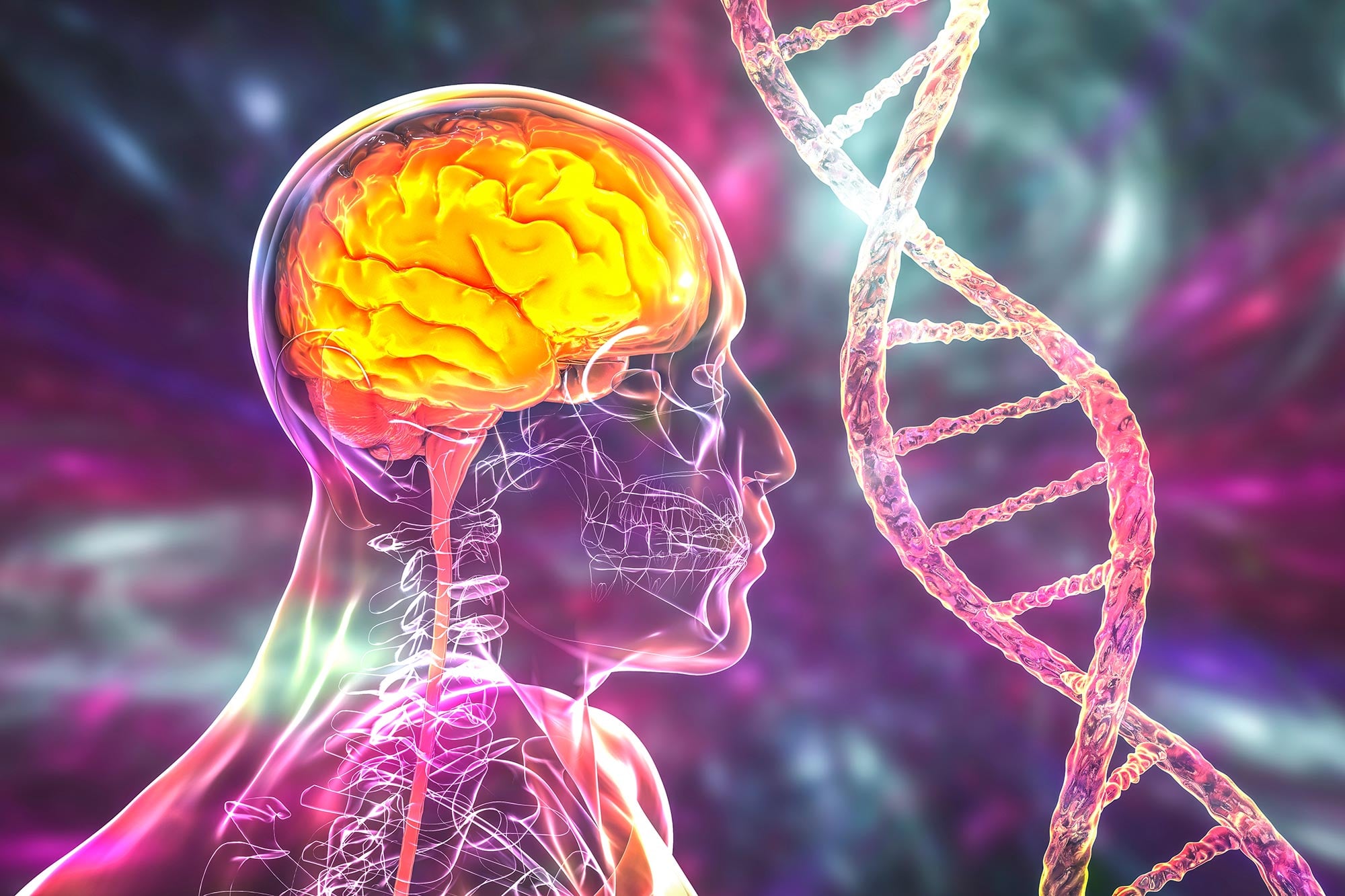
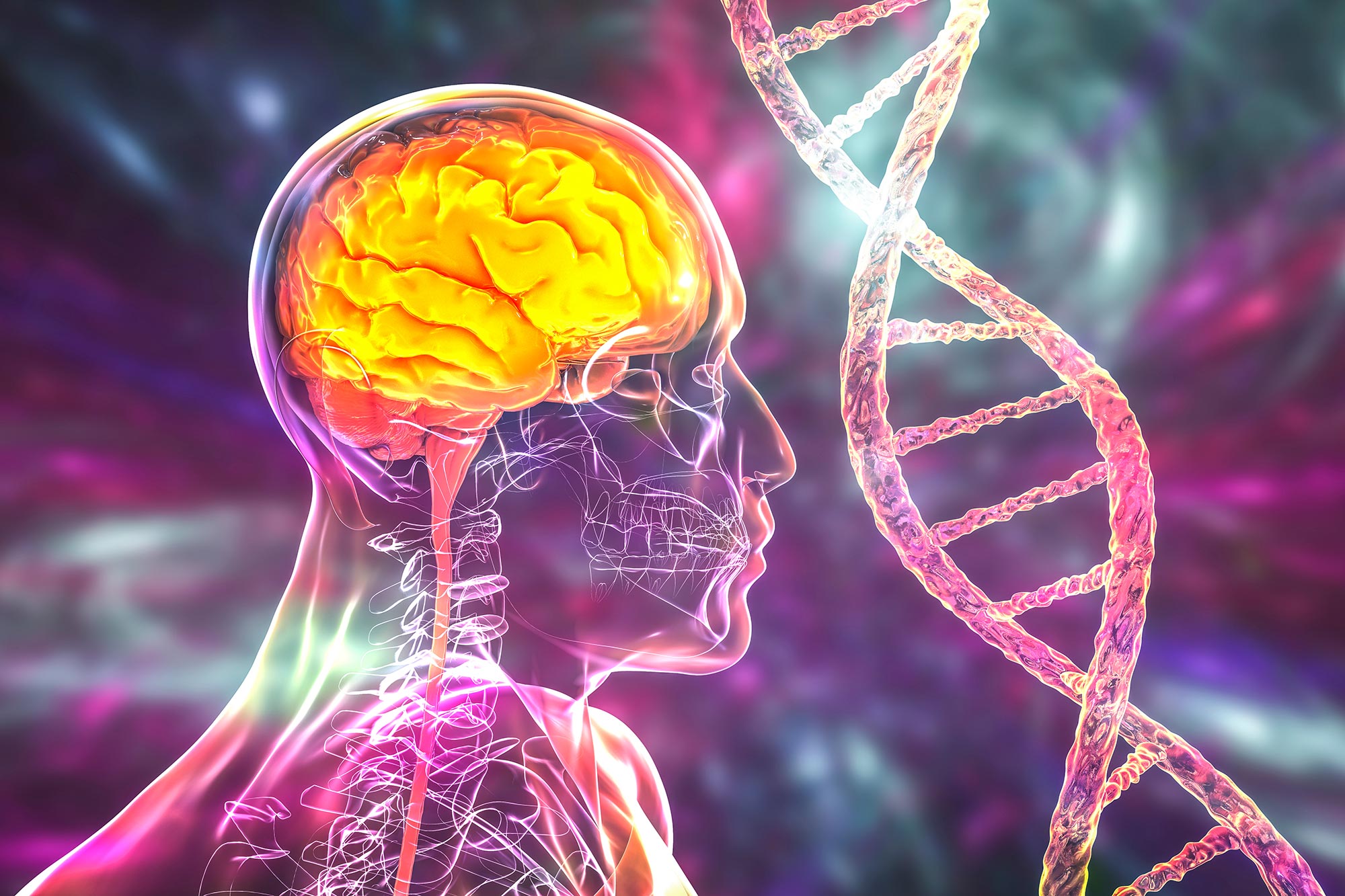
Researchers have recognized elusive DNA switches in brain support cells that influence genes tied to Alzheimer’s disease.
When people think about DNA, they often picture genes that determine our physical traits, influence behavior, and keep our bodies functioning properly.
In reality, genes make up only a small fraction of our genetic material. Roughly 2% of DNA contains the approximately 20,000 genes humans carry. The other 98%, commonly referred to as the non-coding genome or “junk” DNA, holds many regulatory elements that decide when genes are switched on and how active they become.
Scientists at UNSW Sydney have now pinpointed important regulatory DNA sequences that influence how astrocytes function. Astrocytes are support cells in the brain that assist neurons and are known to be involved in Alzheimer’s disease.
In a study published in Nature Neuroscience, researchers from UNSW’s School of Biotechnology & Biomolecular Sciences reported testing close to 1000 candidate regulatory regions called enhancers in human astrocytes grown in the laboratory. Enhancers are short stretches of DNA that can control genes from great distances, sometimes hundreds of thousands of DNA letters away, which has historically made them challenging to investigate.
To carry out the work, the team combined CRISPRi, a technique that can temporarily silence specific DNA regions without cutting them, with single-cell RNA sequencing, which tracks gene activity in individual cells. Using this strategy, the researchers were able to assess the function of nearly 1000 enhancers simultaneously.
“We used CRISPRi to turn off potential enhancers in the astrocytes to see whether it changed gene expression,” says lead author Dr Nicole Green.
“And if it did, then we knew we’d found a functional enhancer and could then figure out which gene – or genes – it controls. That’s what happened for about 150 of the potential enhancers we tested. And strikingly, a large fraction of these functional enhancers controlled genes implicated in Alzheimer’s disease.”
Going from 1000 candidates to 150 real switches dramatically narrows where scientists need to look in the non-coding genome to find clues to the genetics of Alzheimer’s disease.
“These findings suggest that similar studies in other brain cell types are needed to highlight the functional enhancers in the vast space of non-coding DNA.”
Reading between the lines
Professor Irina Voineagu, who oversaw the study, says the results give researchers a catalogue of DNA regions that can help interpret the results of other genetic studies as well.
“When researchers look for genetic changes that explain diseases like hypertension, diabetes and also psychiatric and neurodegenerative disorders like Alzheimer’s disease – we often end up with changes not within genes so much, but in-between,” she says.
Those “in-between” regions are the enhancers her team has now tested directly in human astrocytes – revealing which ones genuinely control important brain genes.
“We’re not talking about therapies yet. But you can’t develop them unless you first understand the wiring diagram. That’s what this gives us — a deeper view into the circuitry of gene control in astrocytes.”
From gene switches to AI
Testing nearly a thousand enhancers in the lab was painstaking work. And it is the first time a CRISPRi screen of enhancers of this scale has been done in brain cells. But with the groundwork now done, the data can be used to train computer tools to predict which potential enhancers are true switches, potentially saving years of experimental time.
“This dataset can help computational biologists test how good their prediction models are at predicting enhancer function,” says Prof. Voineagu.
In fact, Google’s DeepMind team is already using the dataset to benchmark their recent deep learning model called AlphaGenome, she adds.
Potential tools for gene therapy
Because specific enhancers are only active in specific cell types, targeting them could allow precise control of gene expression in astrocytes without affecting neurons or other brain cells.
“While this is not close to being used in the clinic yet – and much work remains before these findings could lead to treatments – there is a clear precedent,” Prof. Voineagu says.
“The first gene editing drug approved for a blood disease – sickle cell anemia – targets a cell-type specific enhancer.”
Dr Green adds that research into DNA enhancers is a promising direction in precision medicine.
“This is something we want to look at more deeply: finding out which enhancers we can use to turn genes on or off in a single brain cell type, and in a very controlled way,” she says.
Reference: “CRISPRi screening in cultured human astrocytes uncovers distal enhancers controlling genes dysregulated in Alzheimer’s disease” by Nicole F. O. Green, Gavin J. Sutton, Javier Pérez-Burillo, Juli Wang, Samuel Bagot, Hannah G. Danon, Kieran Walsh, Akira Gokool, Samantha A. Miles, Guang Yang, Charles A. Herring, Yuheng Liang, Grant Pfundstein, Vladimir Sytnyk, Hamid Alinejad-Rokny, Ryan Lister, Joseph Rosenbluh, Johann A. Gagnon-Bartsch and Irina Voineagu, 18 December 2025, Nature Neuroscience.
DOI: 10.1038/s41593-025-02154-3
Funding: National Health and Medical Research Council, UNSW RNA Institute
Never miss a breakthrough: Join the SciTechDaily newsletter.
Follow us on Google and Google News.